
 Rebuilding Livelihoods Through Early Recovery
 Rebuilding Livelihoods Through Early Recovery
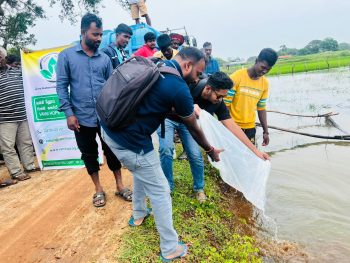
Cyclone Ditwah caused widespread devastation across the Trincomalee District, with inland fishing communities among the hardest hit. In Paddalipuram, Mutur DS Division, 65 families belonging to the Elakantha Inland Fishing Society lost their primary source of income overnight when floodwaters destroyed fishing assets, washed away stocked fingerlings, and damaged access to fishing tanks.
For these families, inland fishing is not a supplementary income. It is their sole livelihood. The destruction caused by Cyclone Ditwah placed households at immediate risk of food insecurity, debt, and long-term economic instability. This project forms part of Phase 2 of our Cyclone Ditwah emergency response, focusing on early recovery and livelihood restoration, ensuring families can rebuild with dignity rather than remain dependent on short-term aid.
Understanding the Impact of Cyclone Ditwah on Fishing Communities
 Understanding the Impact of Cyclone Ditwah on Fishing Communities
At the time Cyclone Ditwah struck, two active fish stocking cycles were underway. One cycle was nearing harvest, while another had been stocked just a week earlier. Both were completely lost due to flooding, wiping out months of planning and income.
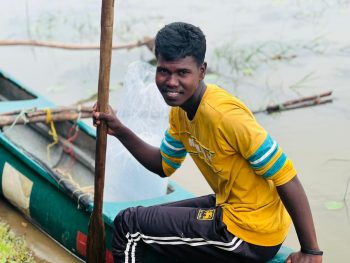
In addition to the loss of fingerlings, essential fishing infrastructure was damaged or destroyed. Canoes, fishing nets, and outriggers were either partially damaged or completely lost, while mud and debris blocked access roads and tank banks. Without urgent intervention, families would have been unable to resume fishing for many months, deepening financial hardship.
What This Livelihood Recovery Project Delivered
 What This Livelihood Recovery Project Delivered
Based on field assessments and consultations with the fishing community, Vanni Hope implemented a targeted early recovery intervention designed to restore income-generating capacity as quickly as possible.
Fishing assets provided
- 5 fibre canoes were distributed to the most severely affected families
- 20 fishing nets were replaced for families who lost nets entirely
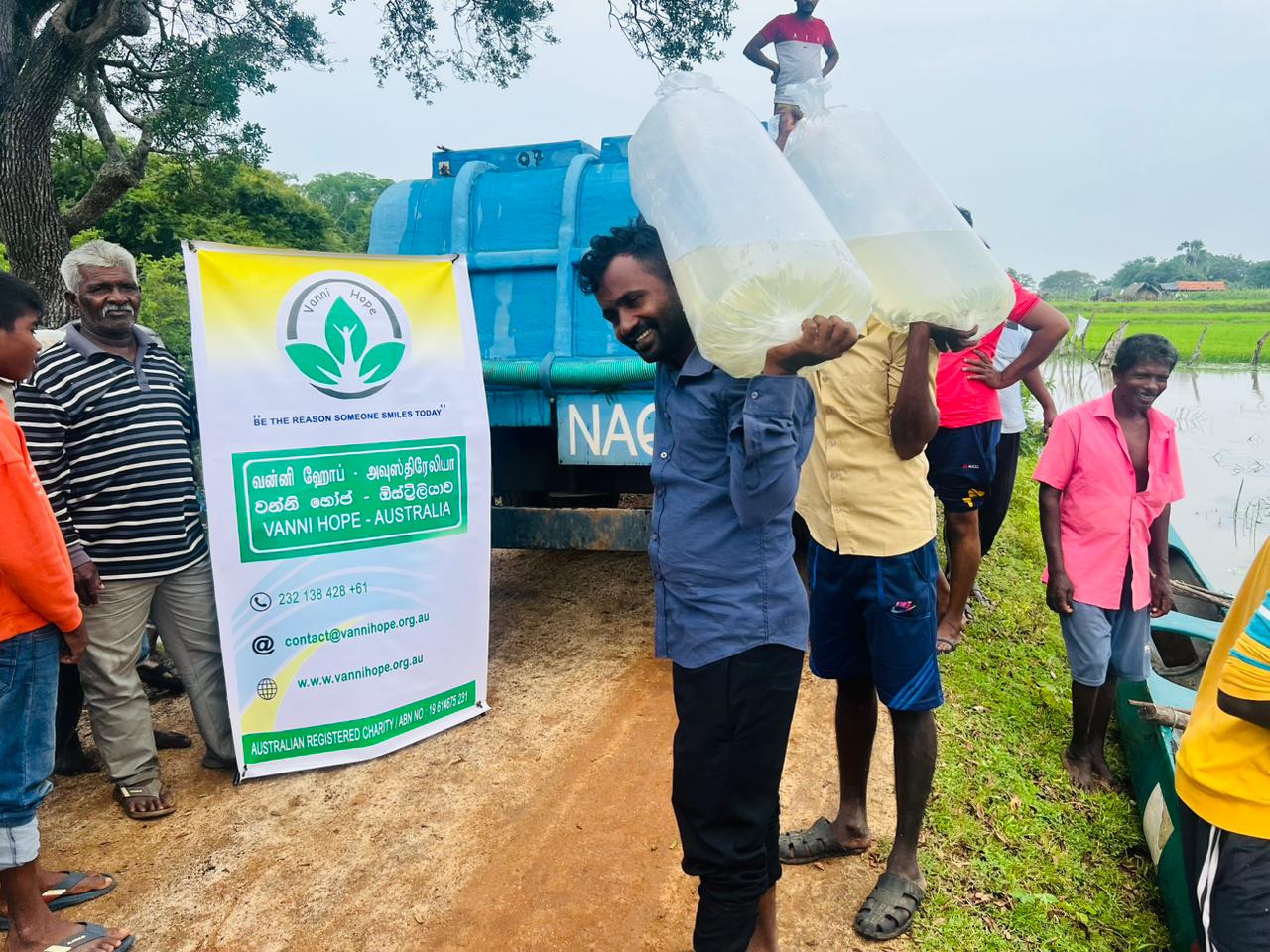
Fish stocking with technical guidance from NAQDA
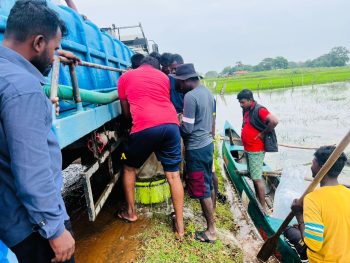
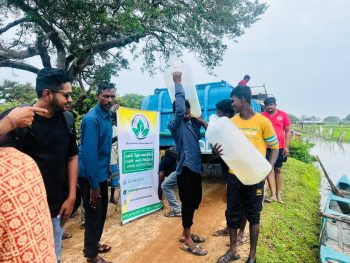
A total of 80,000 fingerlings are being restocked in two phases:
- 40,000 fingerlings stocked so far
- A further 40,000 fingerlings are scheduled for next month
Species stocked include:
- 30,000 Tilapia
- 10,000 Mrigal
- 20,000 Rohu
- 20,000 Catla
This phased approach allows for careful monitoring, improved survival rates, and sustainable recovery of fishing activities
Why Rebuilding Livelihoods Matters
 Why Rebuilding Livelihoods Matters
Emergency food relief saves lives in the immediate aftermath of a disaster. However, long-term recovery depends on restoring livelihoods.
Before Cyclone Ditwah, families in this fishing society, with our support, earned an average monthly income of LKR 35,000–45,000, supporting household food needs, children’s education, and basic living expenses. By replacing fishing assets and restocking fingerlings, this project enables families